

 Billing
 Inventory
 Online ordering
 Reporting
 Menu
 CRM
 Overseepos
 04 Nov 2026
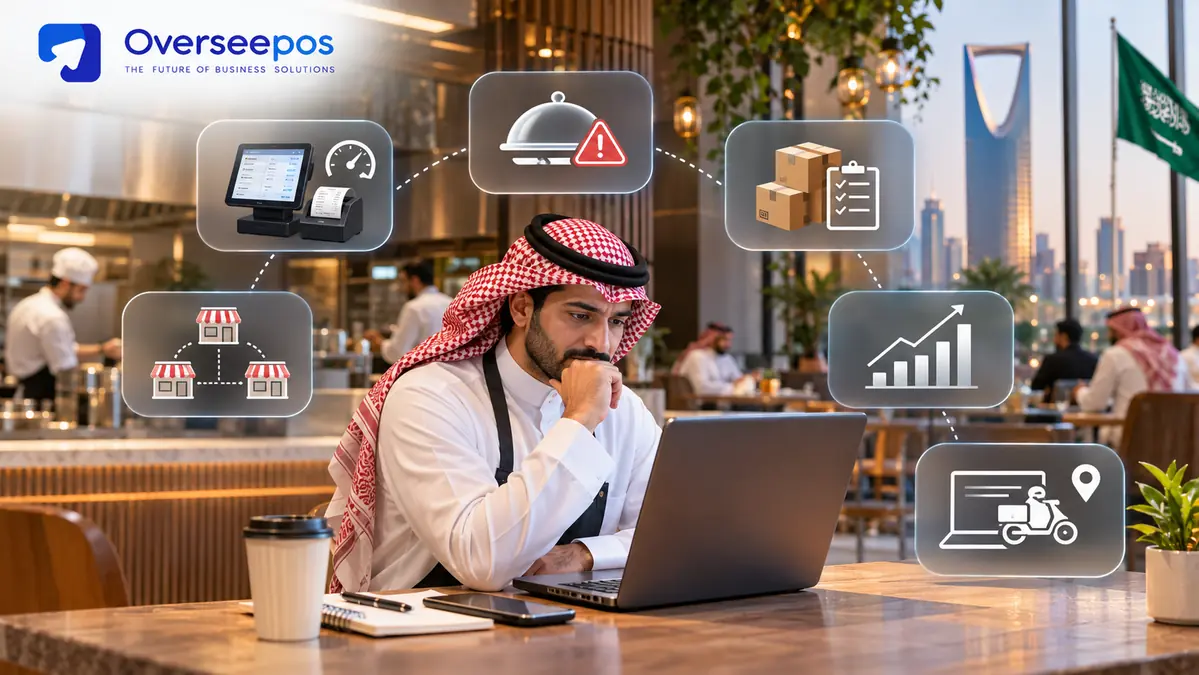
Running a restaurant business is more than just cooking up a great meal and offering superb service to customers. Orders must be quickly processed, inventory must be monitored, and sales and the kitchen operation must be coordinated. If you have an outdated POS system, you may find that these tasks are difficult to complete as you begin to expand your restaurant.
When ordering from a restaurant, Saudi Arabian customers have high expectations for convenience and a smooth payment system. Dine-in, take-out, QR code-based ordering, and online orders have also been a trend among restaurants. In this ever-changing landscape, choosing the best restaurant POS system in Saudi Arabia has become a critical decision more than ever.
In this modern era, restaurant POS software in Saudi Arabia can streamline billing, stock management, and order taking, as well as the daily operations of a business using a single platform. But how can you tell when your existing system is no longer fulfilling your restaurant's needs?
Let's look at these six signs that it is time to upgrade your restaurant POS system in 2027.
1. Your Restaurant Billing Process Is Slower Than It Should Be
Late billing can lead to lunchtime, weekend, and busy dining time headaches. Orders can be manually entered, the bills are each calculated separately, and the tables are switched.
Just imagine a restaurant in Riyadh on a busy evening. Customers are waiting to pay, employees are handling several tables, and the cashier is having trouble getting bills through. Any delay can impact customer satisfaction.
These tasks should be made easy by reliable restaurant billing software, such as:
- Quick order entry and bill generation.
- Support for various payment options.
- Split billing and discount management.
- Automated tax calculations.
- Increased speed of transactions at multiple terminals.
An efficient POS system makes it easier for employees to handle transactions instead of doing unnecessary manual tasks. It also supports the restaurant owner in ensuring that billing is more consistent during busy hours.
2. Order Mistakes Are Becoming a Regular Problem
Common issues most of the manual bill system using restaurants might facing is, orders are verbally given to staff, order slips are handwritten, not all customer details are shared properly with the kitchen staff, or when customers make changes to their orders. It can impact your regular customer satisfaction, food waste, and create extra pressure on kitchen staff.
For example, a customer may order a meal that doesn't include a particular ingredient. In case of not receiving that instruction correctly in the kitchen, the restaurant might have to cook the dish once more.
The reliable restaurant order management system should be designed to trace the ordering process to the kitchen activity, so that the staff can have access to the right order information.
Check for:
- Kitchen Order Ticket (KOT) generation.
- Kitchen Display System (KDS).
- Real-time order updates.
- Clear food customization instructions.
- Order routing to the correct preparation station.
This digital communication process helps both ends, like the front office and the kitchen staff. This helps ensure there is no misunderstanding and more streamlined food preparation.
3. Restaurant Inventory Management Is Becoming Difficult
Inventory problems can mean a loss in the restaurant's profit. When some of the ingredients are in short supply during peak hours, it can delay the process of preparing food, increase the amount of food waste, and increase storage costs.
Manual inventory tracking can be more challenging with these issues, as employees may not update inventory records after each sale or use of ingredients.
With proper restaurant inventory management, the restaurant owner can keep track of the inventory movements, and understand the usage of ingredients, and make appropriate buy decisions.
When looking for an inventory support system, it needs to have:
- Available ingredient quantities.
- Raw material consumption.
- Records of stock movements and stock purchases.
- Recipe-based ingredient usage.
- Low-stock notifications.
- Wastage and inventory cost monitoring.
For instance, if a restaurant sells a dish, the amount of ingredients from the dish can be displayed throughout the inventory based on the dish's recipe.
This gives the restaurant owner greater visibility into stocks and better decision-making when making purchases.
4. You Cannot Clearly Track Your Restaurant's Sales Performance
Are you struggling to find which dish is the best seller on your menu? Are you aware of which days are making the highest sales, or how individual branches are doing?
Without an accurate sales report, the restaurant owner may find him or herself to be in trouble when making crucial business decisions.
While a basic restaurant billing system might be able to record transactions, a modern restaurant POS system would give you valuable information and daily billing as well.
Check for reporting capabilities that enable you to track:
- It tracks Daily, weekly, and monthly sales.
- Most-selling and least-favourite food items,
- Employees’ day-to-day performance.
- Transaction history.
- Inventory movement.
- Branch-wise sales performance.
For instance, something on a menu might be a Sunday favourite, but not so popular during the week. By understanding these, restaurant owners can make adjustments to promotions, manage the stock, and plan menus better.
Real-time reporting also helps to monitor business performance more easily, without depending on manually made spreadsheets exclusively.
5. Managing Online Orders Separately Is Creating More Work
Food habits keep changing among customers. The needs of restaurants and how they have to operate with dine-in, takeaway, QR ordering, and online delivery orders.
If these channels work independently, staff members will have to log on to various channels, input orders manually, and reconcile payments on their own.
This means more work and a greater risk of delays to orders or wrong menu information.
A contemporary Restaurant POS Software solution ought to be able to do the very same.
Important features include:
- Online ordering integration.
- Centralized order management.
- Changes to menus and prices.
- Order status monitoring.
- Order management for pick-up and delivery.
- Online order reconciliation.
In the restaurant industry, for instance, an establishment that takes online and third-party orders can reap rewards for having those orders processed via a shared workflow rather than manually keyed into the system more than once.
A centralized ordering process creates a better way to order for employees and allows for improved visibility of orders both within and across sales channels.
6. Managing Multiple Restaurant Branches Has Become Difficult
Opening new branches for your restaurant business is a good sign, but it is also a new challenge for the business. All your branches should have a uniform menu, the same prices, stocking records, employee efficiency, and service standards in all restaurants.
When operating multiple locations, it can be hard to understand the performance of the business as a whole.
A multi-branch POS system can aid in consolidating key activities such as:
- Branch-wise sales monitoring.
- Centralized inventory visibility.
- Managing menus & costs.
- Employee activity tracking.
- Consolidated business reporting.
- Standardized operational workflows.
For example, if a restaurant has multiple branches in Saudi Arabia, they need to know how a particular store is performing versus the others.
A centralized dashboard makes it easy for management to keep track of the performance of each outlet and to see how the business is running compared to the others, without having to manually request reports from each outlet.
Choosing the right restaurant management system that can handle your current position and also future expansion if wanted to.
How to Choose the Right Restaurant POS System in 2027
Identifying these signs is good for your restaurant growth, but it's only the initial step. The next step is to select one of these POS systems that meets the actual needs of the restaurant.
While comparing the POS software in Saudi Arabia, keep in mind the following:
- You should know what your restaurant is mostly facing right now, whether it's billing, inventory management, order processing, or handling multiple branches simultaneously.
- Review the modern features: Ensure that the software has the essential features that your employees require for day-to-day tasks in the restaurant.
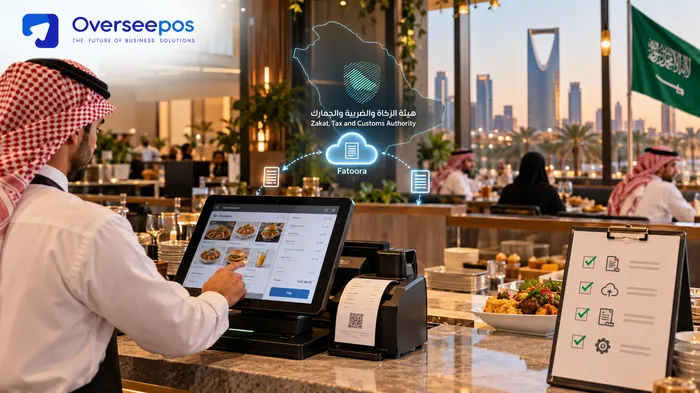
- System interface capable of supporting languages such as Arabic and English, multiple payment options, and configuration for VAT and e-invoicing support from ZATCA for Saudi Business Requirements.
- Integrations: You should have to know if the system can integrate with your current ordering systems, kitchen workflows, and other business systems.
- Request a product demonstration: Explore real restaurant scenarios, like taking orders, splitting bills, updating inventory, and sales reports.
The goal of the right restaurant point of sale system is to actually make daily operations easier – not complicate.
Upgrade Your Restaurant Operations with OverseePOS
A basic billing system is not enough to handle a growing restaurant business in 2027. It needs well-connected POS software that makes it easier for your employees to take orders, monitor your inventory stocks, coordinate front office and kitchen staff, and know your business's day-to-day performance.
OverseePOS-SA provides restaurant POS and management software designed to support restaurants, cafés, fast-food outlets, and cloud kitchens in Saudi Arabia.
Its features include:
- Smart Billing: Simplify transactions with customizable bills, multiple payment methods, split billing, and tax configuration.
- Inventory Management: Monitor ingredient usage, stock levels, purchase orders, and recipe-related inventory.
- Kitchen Display System: Improve communication between front-of-house employees and kitchen staff through digital order workflows.
- Online Order Management: Manage orders from different online ordering channels through a connected system.
- Sales Reports and Analytics: Monitor revenue, item-level performance, inventory, and employee activity.
- Multi-Branch Management: Access centralized business information and monitor operations across multiple locations.
Whether you operate a single restaurant or manage multiple outlets, OverseePOS helps bring important restaurant operations together.
Explore the OverseePOS Restaurant Management System and discover how its features can support your restaurant's operational needs.
Frequently Asked Questions
1. Which Is The Ideal Time To Upgrade A Restaurant POS?
When bill payments are late, orders are lost, you're having inventory issues, it doesn't provide as much information through reports, the restaurant has trouble with online ordering or has more than one location, it's time for an upgrade!
2. What Are The Essential Features A Latest Restaurant POS System Must Have?
An ordering system, Kitchen Order Taking or Kitchen Display, billing, inventory, sales reporting, customer management and proper integration are a part of a progressive and modern restaurant POS system.
3. Is It Possible For Restaurant POS Software To Minimize Food Waste?
Yes. Recipe-linked inventory tracking can help restaurants monitor stock usage, notify them when they are running low, and manage stock orders and control as well. This result is brought about by good recipes, stock list entry, and regular updates to the stock list.
4. What Are The Aspects Saudi Restaurants Need To Take Into Consideration When Choosing A POS System?
Restaurants should perform a review of the billing features, payment options, the ability to invoice in Arabic, inventory management, integration with online ordering, reporting, and compatibility with the requirements of the ZATCA regarding e-invoicing.
Final Thoughts
From kitchen-to-billing problems and inventory to customer service, problems can occur over time with an outdated POS system. It's wise to make better technology decisions before getting into trouble because these issues can be identified early, before the restaurant owner encounters a challenge that would be more difficult to handle.
With the ever-evolving restaurant industry in 2027, the proper restaurant POS software can help simplify day-to-day operations.
Are you ready to take your restaurant to the next level with our Point of Sale system? Request a demo and understand how an OverseePOS-SA restaurant management solution can benefit your business.
Why Choose OverseePOS?
With years of experience in the Saudi market, we understand the unique challenges faced by restaurant owners.
Whether you're running a small café or a large restaurant chain, OverseePOS can help you optimize your operations.